
Bridging’s Shared Journey: Diversity, Equity, Inclusion, and Belonging
“It’s hard for people who look like me or who have been in my situation to get access to resources, to be listened to, to have a voice.
The person at the front desk at Bridging — she was attentive and patient. She looked me in the eyes. She was genuinely concerned and explained how Bridging works. She told me I was in good hands. My anxiety literally melted away. I felt safe here. I didn’t have worry about anything.”
— Ash, shopped Winter 2024
Advancing DEIB is vital to Bridging’s mission.
Advancing Diversity, Equity, Inclusion and Belonging (DEIB) is vital to our community and Bridging’s work of furnishing homes with hope alongside people who are transitioning to housing stability.
We value the diversity and uniqueness of people who are connected to Bridging, including identities of gender, race, ethnicity, religion, abilities, sexual orientation, or any other identities, and seek to learn about and celebrate differences. Bridging leadership, staff, and volunteers are taking intentional steps to approach every area of our programs and services with a DEIB lens.
“Together, we can get Bridging where it needs to be, moving on the continuum of being more inclusive and equitable in everything we do. There can be a fear in the unknown and talking about things that are uncomfortable, but the more you do it, the more comfortable it becomes. Each person is on their own individual journey, and there is always more to learn. We need many voices and the participation of everyone,” says Myra Falteysek, Director of Human Resources at Bridging.
The Bridging team is committed to doing the hard work required, both personally and professionally. Through self-reflection and a willingness to learn, we seek to better understand how our unique experiences are influenced by both privilege and inequity. We strive to be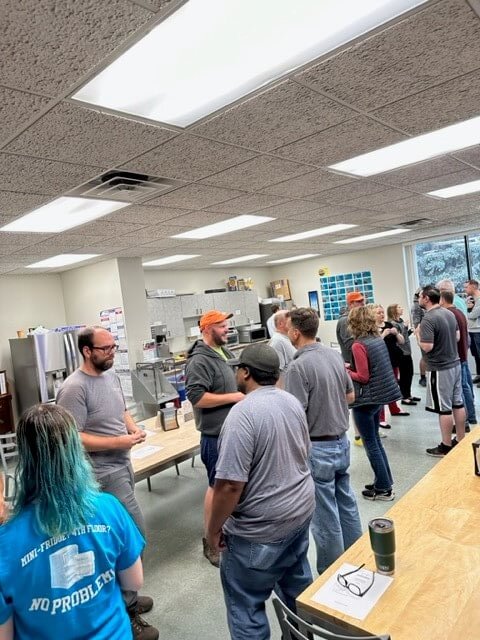 better equipped to dismantle the racial and social inequities that have caused devastating harm to historically marginalized communities.
Bridging board member Erryn Williams explains why Bridging’s DEIB work is essential to fulfilling its mission:
“If we are going to furnish homes with hope, we must understand that we are furnishing diverse homes with families of different cultures who may have specific needs. Someone who needs our services may speak a different language. Some families may need different home items to cook cultural foods. People have unique needs. We must be culturally aware, so we can provide services in the best possible way with the interests of the clients we serve in mind.
We need to be proactive, ask questions, and be thoughtful about how we interact and provide excellent service. We can listen and learn to find out what will make a difference in someone’s home, so people have a positive experience and feel a sense of pride.”
Bridging staff and leadership are working toward measurable DEIB goals. They have embraced training and guidance from partners at Stanton Adams Consulting, a Minnesota Black-owned business that advances DEIB efforts alongside nonprofit organizations.
“DEIB work is extremely important for Bridging,” says Myra. “Our mission serves a community that is very diverse. People of one culture, gender identity, or ability, may not truly understand the needs and perspectives of someone of another gender identity or ability, for example. Staff and volunteer engagement, training, and representation is essential to Bridging’s DEIB work.”
Training/Advocacy:
During the last two years, Bridging’s leadership and staff have invested significant time and resources in DEIB initiatives and training.
- Microaggressions Training: This mandatory training for Bridging staff and volunteers explores the difference between intent and impact. When our words or actions unintentionally cause harm to someone, we can learn, be an ally, and advance equity.
- Unconscious Bias Training: (staff training) – This staff training, facilitated by board member Erryn Willams helped staff members explore important questions including, “How diverse is your universe?” and “How do our unique life experiences create unconscious bias?”
- Bridging Lunch & Learn: Access to Shelter and Affordable Housing: Caseworkers from a Bridging agency partner presented about their work alongside community members transitioning to housing stability. Staff and volunteers learn about resources and inequities that impact access to safe shelter and affordable housing.
- Volunteer Donald’s blog:A reflection from Donald Gault, a Roseville shopper who attended the training on microaggressions.
- Minnesota Homeless Day on the Hill: Bridging staff and volunteers are invited to participate in this important day of advocacy to help ensure that every Minnesotan has access to safe shelter and affordable housing.