The Reuse Minnesota Partnership: Changing the Community Mindset to Reuse
Bridging is committed to sustainability, keeping more than 11 million pounds of usable furniture and other essential household items out of landfills each year. Reuse of items is critical to Bridging’s commitment to sustainability, and our 10+ year evolving partnership with Reuse Minnesota has helped generate innovative ideas for maximizing reuse and bringing more quality inventory through Bridging’s doors.
Founded in 2012, Reuse Minnesota builds partnerships and supports a vibrant network of reuse practitioners through education, advocacy and promotion. Reuse Minnesota is dedicated to protecting the environment for future generations by reducing waste in landfills, reducing greenhouse gas emissions and pollution, and improving water quality.
Bridging was a founding member of Reuse Minnesota in 2012. Steve Jameson, Bridging’s facilities manager and a past Reuse Minnesota board member, has been involved with the organization since 2014.
“Reuse has come so far,” says Steve. “In the early years, it was a grass roots organization trying to bring together businesses, government entities, nonprofits, and thrift stores, all focused on reuse. That’s what Bridging does: takes something that has a life, and gives it a new life and a new home. Reuse Minnesota was such a natural fit. We wanted to be a part of it.”
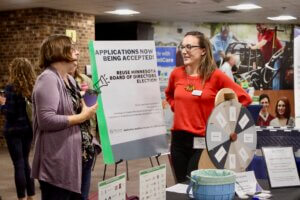 Today, more than 75 organizations are members of Reuse Minnesota, and this number continues to grow. To open the network to even more organizations, in the summer 2023, they launched a small business memberships scholarship to provide reduced cost and free memberships to small reuse businesses and nonprofits that would otherwise be unable to join. Priority is given to organizations that are BIPOC owned/operated, located in Greater Minnesota, or have a staff of 10 or less.
Dedicated leadership and increased funding has also advanced their education and advocacy efforts in the Twin Cities and greater Minnesota through webinars and an annual conference.
Executive Director Emily Barker describes the heart of Reuse Minnesota’s work:
“We help people change their mindset to reuse and repair, not recycling or just throwing stuff away. We help people understand they have options. We often respond to inquiries when people or organizations will ask, ‘what do I do with this?’ We’re the connector in the web. Through our network of members, we come up with ideas and partnerships that lead to reuse.”
Reuse Minnesota offers its expertise and resources in a variety of ways, and education is a critical piece.
The nonprofit’s extensive collection of webinars connect individuals and organizations to the latest ideas around reuse. A new grant-funded education program for high school students in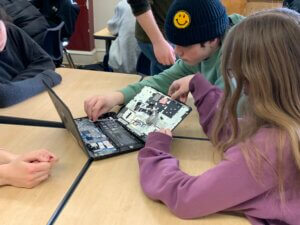 Hennepin County inspires youth to incorporate reuse into their lives and consider reuse careers. Reuse Minnesota is also working with a contractor to create curriculum for a new training that will teach people how to start their own resale businesses. The training will launch in the spring of 2024.
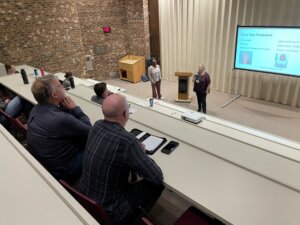
Reuse Minnesota recently hosted its fourth annual conference at Hennepin Technical College in Minneapolis. Reuse practitioners (member and non-member) including business professionals, nonprofits, government agencies, and students from Minnesota and across the country shared the best and latest reuse practices.
Diana Dalsin, Bridging’s Director of Strategic Partnerships, a second-time presenter at the conference, is a key collaborator with Reuse Minnesota and its member organizations.
“The Reuse Minnesota member directory is very valuable. The conversations with Reuse partners open up our eyes to creative solutions. It’s often been about networking and best practices. Now the group has moved from conversation to action, and the work has evolved to critical issue conversations and how we can do things better,” she says.
The partnership between Bridging, Dakota County, and Certified Recycling is an example of the problem solving that happens through Reuse Minnesota. Public, private, and nonprofit coordination helps facilitate the process of getting essential inventory to Bridging versus the landfill.
“What’s also critical to Bridging is to be in the conversations at the state level. As a reuse leader, the network allows me to speak with experts on a regular basis and partner on what matters most,” she adds.
Collaboration within the Reuse Minnesota network at and beyond the conference has also fueled important advocacy efforts. One result of these efforts is the recently passed Right to Repair legislation requiring manufacturers of electronics and appliances to provide essential tools, hardware, and instructions, so consumers can repair and reuse broken items, instead of recycling and buying new.
Emily Barker is excited about the visibility and impact of Reuse Minnesota’s work, and she expects that with the commitment of its growing membership, its collective impact will sustain communities and our planet for generations to come.
Learn more about Reuse Minnesota.
Find out more about Bridging’s partnership with Dakota County.
Find out more about Reuse Minnesota’s advocacy work.