
Centering Staff Voices: Reflections on Culturally Responsive Practice Training
Building on Bridging’s Commitment to Diversity, Equity, Inclusion, and Belonging
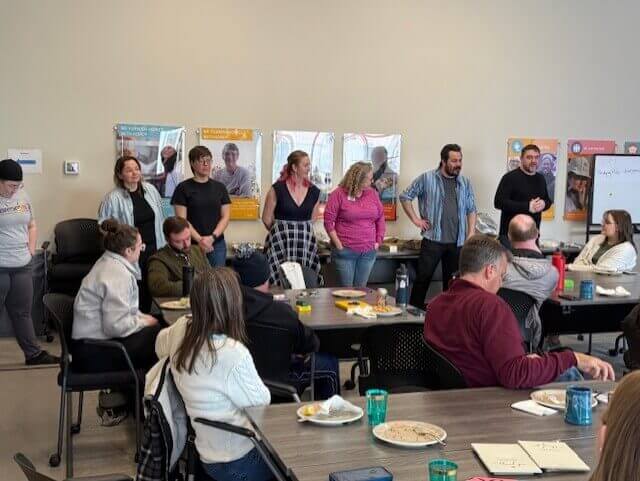
Earlier this month, Bridging staff members participated in a Culturally Responsive Practice training session facilitated by the Training Institute, a program offered by People Incorporated (a Bridging agency partner). Trainer Warren Duncan invited the group to examine how cultural identity shapes the way we make meaning of the world and relate to others. The training was offered as part of Bridging’s commitment to Diversity, Equity, Inclusion, and Belonging.
In an engaged and passionate conversation, staff members discussed many aspects of identity, such as national origin, socioeconomic status, gender identity, and religious beliefs, and how these important characteristics which create a unique identity can also relate to different experiences of power or marginalization (illustrated by the Training Institute’s Social Location Wheel diagram).
Bridging staff members share their reflections:
“Everyone has their own lens they look through and it impacts how they see the world. People can be from the same neighborhood and have the same upbringing and see things differently. The training was helpful to our work. It forced us to be introspective. There was a little discomfort, but that’s good for Bridging. We need to show up and do it [the work].” — Sasha
“The training, what we learned, was applicable in both my personal and professional life. This is the best DEIB training we’ve had so far. There was so much participation.” — Mike
“We needed even more time. These were such big topics to discuss.” — Sara
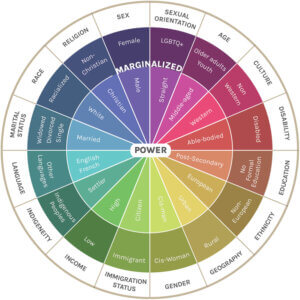
“It was important to learn about the layered Social Location Wheel, so we could understand marginalization and power, and find ways to change it.” — Joel
“We all grew up in a different way. We have biases and perceptions of cultures that may not be true. We learned the importance of approaching every interaction with informed curiosity – recognizing how both our own cultural lens and that of others shape communication, behavior, and meaning. This helps us avoid assumptions, acknowledge disparities, and build stronger, more authentic connections. — Myra
The training encouraged an approach of cultural humility, by meeting people where they are at, listening, and asking questions to better understand someone’s experience, strengths, and needs. This approach creates an environment and experience that fosters belonging.
Here are takeaways from Bridging staff:
“It’s so easy to only see things from our own individual perspective, guided by our lived experiences, and it was nice to be reminded to not see other just by their “single story.I also loved our discussion around what stereotypes others have of us and how they are rarely true.” — Erin
“People felt comfortable sharing their feelings. The facilitator made the conversation feel open and welcoming. He made everyone feel comfortable. It [cultural responsiveness] can be a polarizing topic, but he didn’t make it or us feel that way. I’m glad that Bridging is talking about it.” — Wendy
“It opened my mind. I come from a background where culture and racism weren’t talked about. Don’t’ assume that you think you know more about someone until you get to know them. There are ways that we can do better when we approach someone new. I’m glad we are doing this. The knowledge and awareness are good.” — Becka
Bridging staff members also translated their learning and observations into culturally responsive, person-centered strategies for their work at Bridging:
“In the times we live in, it’s so important to remain kind, respectful, and curious with each other, whether its staff, volunteers, or clients who utilize our services, so we can learn and further our mission.
There are things that impact people more because their identities. Some aspects are visible and some are not visible. They experience it deeply if they hear or experience microaggressions, again and again. People who have privilege might not experience that.” — Alyssa
“We serve a diverse population. We must be focused on what they need. We may need to adjust to how we meet them. Rather than having them “bend” to meet our process, we can adjust to meet their needs by listening and asking questions. “What goals to you have? What questions do you have?” We can get their approval, help them feel more comfortable, and help empower them/truly be in service to them.” — Kirk